
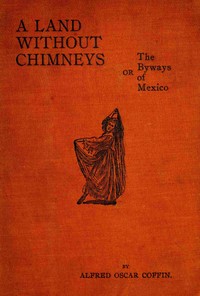
Land without chimneys; or, the byways of Mexico by Alfred Oscar Coffin
So, imagine packing your bags for a trip to Mexico right around 1900, but you have no real plan, your Spanish is patchy, and you're mostly riding mules through weird backwaters. That's the movie that plays in your head when you notice this thing called 'Land without chimneys; or, the byways of Mexico' by Alfred Oscar Coffin. The word 'chimneys' is actually super important—Coffin explains that when you look across the typical Mexican horizon around his era, you'll noticed… well, no factory smoke stacks. Zero. Zip. It’s one of those blunt visual observations that hits you funny and sets the tone for the whole travelogue.
The Story
Coffin set off on a real do-it-yourself journey. He traveled via bumpy, slow trains, horse-drawn rigs, and plenty of footwork into the parts of Mexico far from the gleaming cities. He would trudge through strange, dried-up riverbeds, negotiate prices in village markets with people who already saw him as a walking bag of money, and sit through uncomfortable but hilarious dinners where he didn’t fully speak the language. Along the way, while literally stepping in piles of dung and rainwater, Coffin was hungrily picking up bits of local politics, agriculture and just the sheer brutal difficulty of daily life for regular Mexicans. The central shock for Coffin—something that a modern budget traveler in even lesser-known Mexican corners would rarely find—was seeing how little industrialization had changed the rural landscape. There were no smoke stacks, just endless ambitious, human-scale fields. The ‘mystery’ here isn’t a traditional whodunit, but the cultural gap: How do they live without *our* stuff? Why do these cultural habits work for them?
Why You Should Read It
Coffin makes you feel like you're schlepping alongside a mildly grumpy but actually good-hearted friend. He doesn't run from how confused and gross everything feels. For example, he regularly stops mid-journey to complain about awful shoe choices (his initial boots were garbage for a rainy climate). But just when you feel the boredom, he’ll casually describe watching an intense traveling circus pass by, or offers a deadpan observations like, ‘This town has no inn, but the church kindly stored my backpack next to the angel statue.’ For modern people flipping through Instagram dream life traveler pictures, this book smashes the curtain. It talks openly about homelessness, infestation, constant bartering, and the powerful silence at night when machinery cannot drown it out.
Final Verdict
If you are traveling / interested in geography historical oddness → 5 out of 5 dusty shoes. (Pick for yourself):
You like breezy 18 to 23-word poetic metaphors shot through with cranky honesty.
Perfect gift for: Anyone faking going backpacking through Latin America via Pinterest; climate-change historians wondering smugly how people braved humidity without AC; smart kids before Al Gore said we ruin oxygen—I like how creatively a total clueless bookworm brought to Mexico a look around its gorgeous empty smokeless territories.
This title is part of the public domain archive. It is now common property for all to enjoy.
Charles Moore
1 month agoHaving read the author's previous works, the step-by-step breakdown of the methodology is extremely helpful for students. I am looking forward to the author's next publication.








Thomas Rodriguez
3 months agoI stumbled upon this title during my weekend research and the language used is precise without being overly academic or confusing. This adds significant depth to my understanding of the field.