
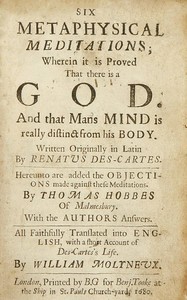
Six metaphysical meditations by René Descartes
Okay, let's be real—this isn't a book with a plot in the usual sense. There are no detectives or dragons. Instead, the 'story' is the journey of a single mind. René Descartes invites you to sit with him for six days (each chapter is a 'meditation') while he tears down everything he thinks he knows and tries to build it back up from scratch.
The Story
On Day One, Descartes throws out all his beliefs. He decides to doubt everything: his senses (they've tricked him before), his body (maybe he's dreaming), even logic and math (what if an evil demon is messing with his mind?). He's left with nothing but doubt itself. On Day Two, he finds his lifeline. Even if he's being deceived, there must be a 'him' that is being deceived. 'I think, therefore I am' becomes his first solid truth. From there, he spends the rest of the week trying to get the world back. He argues for the existence of a perfect, non-deceiving God (because the idea of perfection must come from somewhere perfect). Once God is in the picture as a guarantee, he can start trusting his clear and distinct ideas again. This lets him prove the physical world exists and, in his final big move, argue that the mind (a thinking thing) and the body (an extended thing) are completely separate substances. The story ends not with all questions answered, but with a new framework for understanding reality.
Why You Should Read It
You should read this because it’s thrilling to watch someone think this hard. It’s like mental parkour. Descartes isn't giving you dry facts; he's letting you overhear his internal struggle. You feel his frustration and his breakthroughs. The famous 'I think, therefore I am' moment isn't just a quote—it's a desperate grab for sanity in a sea of doubt. Reading it, you start questioning your own assumptions. How do I know *anything* is true? It’s philosophy that feels personal and urgent, not abstract and distant.
Final Verdict
This book is perfect for curious thinkers who enjoy a good mental puzzle. If you've ever wondered where modern science and philosophy truly began, this is a cornerstone. It’s also great for anyone who likes memoirs of intellectual adventure. Be warned: it's challenging. Some arguments feel like logical leaps, and you'll likely disagree with him (many have for 400 years!). But that's part of the fun. You're not just reading a book; you're arguing with one of history's greatest minds. Give it a go if you're ready to have your foundation gently—and brilliantly—shaken.






James Torres
9 months agoFrom the very first page, the flow of the text seems very fluid. Thanks for sharing this review.