
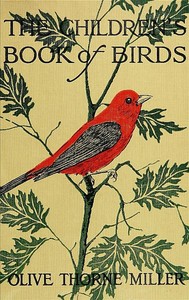
The Children's Book of Birds by Olive Thorne Miller
Let's be clear from the start: The Children's Book of Birds isn't a novel. You won't find a villain or a daring quest. Instead, think of it as a friendly guide and a series of warm conversations. Olive Thorne Miller writes directly to the reader, often as 'my dear children,' taking them by the hand through the seasons and habitats. She introduces birds one by one—the house wren, the song sparrow, the downy woodpecker—giving each a personality and a story. She describes their looks, their songs, their nests, and their clever habits in simple, vivid language. The 'plot' is the cycle of a bird's year: finding a mate, building a home, raising demanding babies, and surviving the challenges of weather and predators. It's the true-life drama of your own backyard.
Why You Should Read It
This book is a dose of pure, gentle wonder. Miller’s voice is its greatest strength. She isn't a distant scientist; she's an observer who clearly loves and respects her subjects. She gets frustrated when a bird she's watching flies away, and she celebrates their small triumphs. Reading it, you feel like you’re learning from a friend. The charm is in the old-fashioned style and the timeless advice. She teaches you how to be still and patient, to watch without disturbing, and to appreciate the ‘bird politics’ of your local trees. It’s less about memorizing facts and more about learning a new way to look at the world. In our busy, screen-filled lives, this book is a quiet reminder of a simpler, deeper kind of curiosity.
Final Verdict
This is a perfect book for nature lovers, homeschoolers looking for a living science book, or anyone who feels a pang of nostalgia for classic, heartfelt writing. It’s ideal for reading aloud with kids (the language is clear and beautiful), but I’d argue it’s just as rewarding for adults. If you enjoy the feel of a weathered, well-loved book and the idea of seeing common birds as fascinating neighbors, you’ll be captivated. It’s not a modern field guide with photos—it’s a window into both the natural world and a kinder, slower time. Keep a copy by a window and dip into a chapter now and then. You’ll never hear a chickadee's call the same way again.
Oliver Walker
6 months agoI was skeptical at first, but the depth of research presented here is truly commendable. Truly inspiring.
Barbara White
1 year agoGreat reference material for my coursework.

Melissa Smith
1 month agoThe layout is very easy on the eyes.