
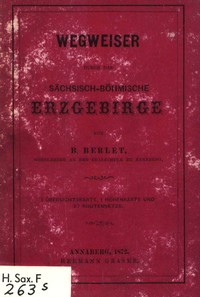
Wegweiser durch das sächsisch-böhmische Erzgebirge by Bruno Berlet
Let's be clear from the start: Wegweiser durch das sächsisch-böhmische Erzgebirge is not a page-turning thriller. Published in 1888, it is, on its surface, a practical guidebook. Bruno Berlet wrote it to help travelers, hikers, and perhaps industrial visitors navigate the Ore Mountain region. He gives you routes, describes towns like Annaberg and Karlovy Vary (then Carlsbad), points out notable mines, and suggests places to stay.
The Story
There isn't a plot in the traditional sense. Instead, Berlet builds a portrait of a region at a specific point in time. The 'story' is the journey he lays out for you. He starts by explaining the geography and then walks you through different travel circuits. He talks about the mining history that shaped the land, the bustling cottage industries (like wood carving and lace making), and the local customs. He notes scenic viewpoints, crumbling castles, and busy market squares. He writes with the assuredness of a local who loves his home and wants you to love it, too. The book's narrative is the experience of exploration itself, guided by Berlet's knowledgeable and often affectionate voice.
Why You Should Read It
This is where the magic happens. Reading Berlet today is a layered experience. First, it's a direct line to the 19th-century mind. You see what a traveler valued, what they found beautiful or noteworthy. Second, and more powerfully, it becomes a tool for imagination and detective work. As you read about a pristine forest path or a thriving silver mine, you can't help but wonder: Is that forest now a housing estate? Is that mine a museum? The book transforms from a guide into a historical document that lets you measure change. You feel the ghost of the past on every page. Berlet's personal enthusiasm is infectious; he isn't just listing facts, he's sharing a passion.
Final Verdict
This book is a niche treasure, but a treasure all the same. It's perfect for history buffs with a focus on Central Europe, genealogy researchers with roots in Saxony or Bohemia, or hardcore travel enthusiasts who enjoy comparing old and new guides. It's also great for anyone who simply loves the feeling of holding history in their hands. You won't get dramatic character arcs, but you will get a profound sense of place and time. Think of it less as a book to read cover-to-cover, and more as a portal to dip into. Keep a modern map or Google Earth open beside it, and you've got yourself a fascinating, quiet adventure.
Richard Hernandez
1 year agoIf you enjoy this genre, the depth of research presented here is truly commendable. I will read more from this author.





Ethan Jackson
11 months agoPerfect.