About 425 minutes
Mark Twain's Speeches — Story, Setting & Ideas
Fantasy Juvenile Worlds
97,680 recorded words. 12 minutes difference from this book's estimate.
View Gutenberg source #3188
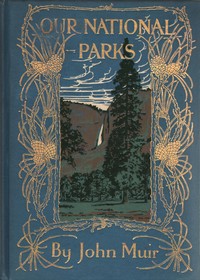
Our National Parks — Reading Notes can be approached with a clearer sense of reading commitment from its source measurements: 94,896 words, 6 hr 53 min estimated reading time, and 14 detected text sections.
The text analysis averages about 28.0 words per sentence, while the detected sections provide another way to judge how the source is divided.
Project Gutenberg metadata also associates the work with “Yellowstone National Park,” connecting these edition facts with the source record’s subject description.
Explore this collection
These alternatives are selected using recorded categories and estimated reading time.
About 425 minutes
Fantasy Juvenile Worlds
97,680 recorded words. 12 minutes difference from this book's estimate.
View Gutenberg source #3188About 454 minutes
Fantasy Juvenile Worlds
104,278 recorded words. 41 minutes difference from this book's estimate.
View Gutenberg source #70313About 473 minutes
Fantasy Juvenile Worlds
108,729 recorded words. 60 minutes difference from this book's estimate.
View Gutenberg source #45637Search stored excerpts and compare books → Choose by your preferences →
Choices use stored catalog measurements. Estimates vary with reading speed. A shared category is a catalog label, not a claim that two books have the same argument or literary quality.
Search reads excerpt text stored with this catalog and links to its associated Gutenberg record. The connection is stored in the site database; this tool does not recheck that every excerpt is word-for-word identical to that external record. Excerpt search does not cover every chapter and does not verify historical publication dates.
Catalog snapshot checked: 2026-09-25. Coverage: 94 public books, 94 available source excerpts.
Read the complete public-domain text at its original source.
Read on Project GutenbergJohn Muir's Our National Parks opens with a preface stating that the sketches first appeared in the Atlantic Monthly, aiming to show forth the beauty and usefulness of wild mountain reservations. The catalog places this work under Fantasy & Juvenile Worlds, yet the excerpts reveal a naturalist's meticulous field notes, not fiction. Muir's prose is grounded in specific detail: he describes the Douglas squirrel as a 'fluff of fur' that 'opens his mouth when he talks or sings,' and notes its habit of cutting grass heads and nibbling grain 'as if playing on a flute.' Such observations are precise, not fantastical.
The Project Gutenberg record assigns Our National Parks to Fantasy & Juvenile Worlds, yet the excerpts contain no fantastical elements. Muir writes of real animals in real landscapes: the Douglas squirrel's 'black and animated, shining like dew' eyes, the woodchuck's 'bulky, fat, aldermanic' appearance. His language is empirical, not imaginative. The category may reflect a broad classification for nature writing aimed at younger readers, but the text itself is a work of natural history and conservation advocacy. Muir's dedication to Charles Sprague Sargent, a botanist, further underscores its scientific intent.
Muir's descriptions are built from repeated, patient watching. He notes the Douglas squirrel's vocal range: 'a considerable variety of notes which correspond with his movements, some of them sweet and liquid, like water dripping into a pool.' He follows a woodchuck's track through deep snow to a mountain summit, inferring its purpose from the 'steady trend' of its path. These passages show Muir as a field naturalist who interprets animal behavior through close attention, not anthropomorphism. His writing avoids generic praise; instead, he offers concrete details—the squirrel's tail 'describes a half circle' with each chip—that ground the reader in observable reality.
Though the excerpts focus on animal life, Muir's preface states his aim: 'to incite the people to come and enjoy them, and get them into their hearts, that so at length their preservation and right use might be made sure.' This advocacy is woven into the natural history. By portraying the squirrel as 'gentle, confiding, and busily cheery,' Muir creates affection for a creature that might otherwise be overlooked. The woodchuck, living 'high in the frosty air, beside the glaciers,' becomes a symbol of resilience. Muir's descriptions serve a conservationist purpose, making the parks' inhabitants memorable and worthy of protection.
Readers should approach Our National Parks as a series of linked essays, each focusing on a different park or aspect of its natural history. Muir's voice is personal but grounded in evidence; he does not fictionalize. The appendix and map mentioned in the note are not included in these excerpts, but the text itself rewards attention to its precise, affectionate observations of wildlife and landscape.
Muir’s notes on the woodchuck’s quiet vigilance made me think of an old afternoon, reading The works of Richard Hurd, volume 4 (of 8) — A Reader’s Guide beside a sunlit window. Both books share that patient, unhurried attention—one to wildness, the other to thinking. It felt like finding a forgotten letter, or hearing a familiar voice under different leaves.
Answer a few questions and save a private reflection on this device.









